Here is the hard truth: You are not a special snowflake, and neither is your firm.
I start there because I hear the same objection from firm founders almost every week. It usually sounds something like this:
"Mike, our work is high-trust. Our work is complex and unique. And the people we need to reach only work with those they trust. Why would we spend time on marketing? We just need to put more boots on the ground."
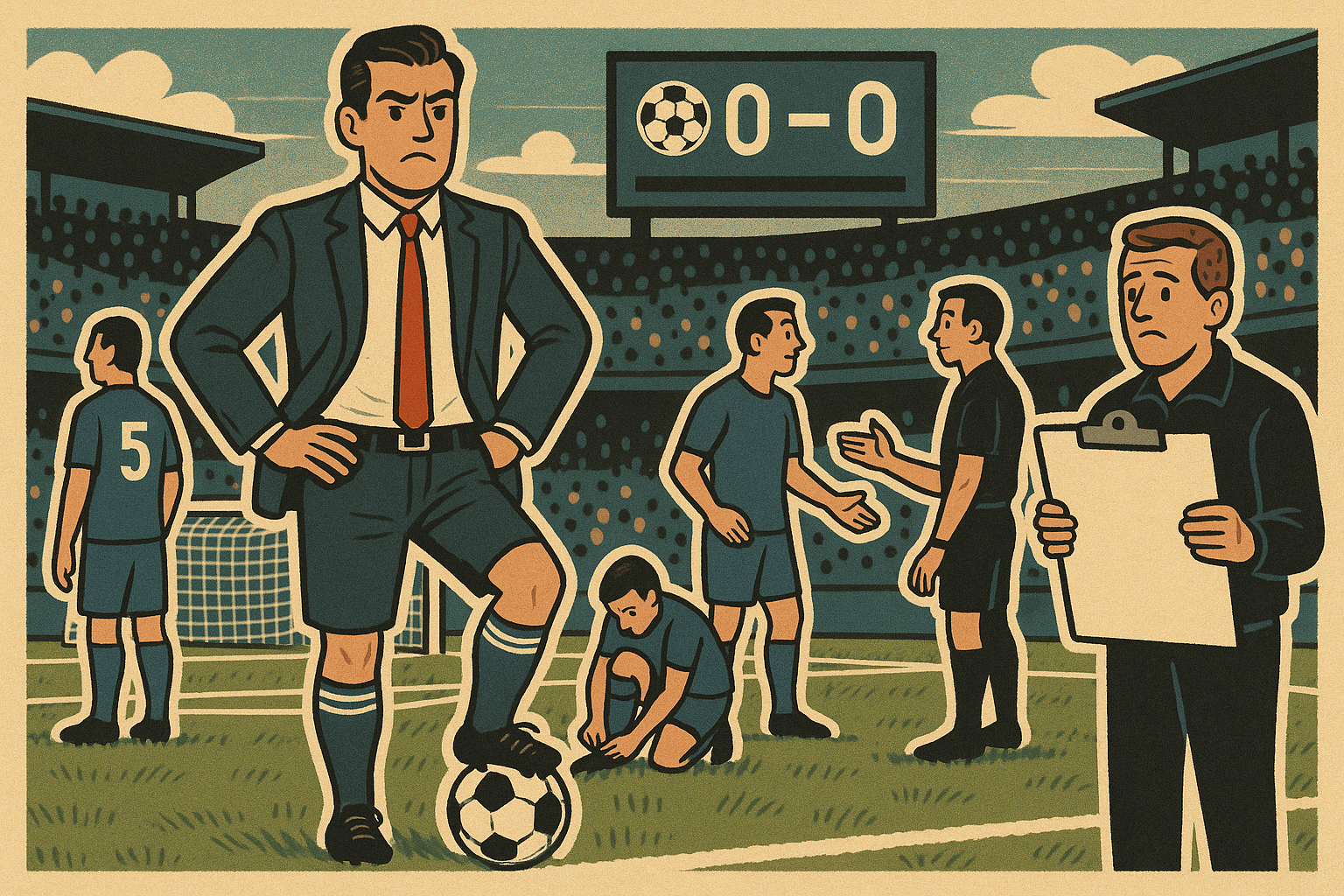
The belief here is that your "special" quality means relationships are the strategy. But let’s look at this through a different lens. As a huge Liverpool fan, this example hurts a little right now, but it’s the perfect illustration of what I see happening in firms every day. Look at Liverpool under Arne Slot right now. We have world-class talent on the pitch. We have the "star strikers" and the elite playmakers who can change a game in a second. But currently, there is seemingly no coherent system, no consistent formation, and the starting lineup changes every week. The result? We are relying entirely on individual brilliance to bail us out. We’re hoping our stars pull a rabbit out of the hat because the system isn't creating the chances for them. When the system is broken, even the best talent looks lost.
In your firm, Business Development is the star player. Positioning is the system. Without the system (the positioning), you are just hoping your rainmaker gets lucky or scores off sheer individual effort. And hope is not a strategy.
The Problem with "Just More Conversations"
When you view positioning as just a marketing exercise—or worse, just "messaging"—you miss the point entirely. Positioning is a strategic business exercise. It’s about how you enter the market and win. Without it, your BD efforts run into the "Networking Ceiling".
I saw this recently with a digital transformation firm. Their early growth was great, but they hit a stall point and couldn't figure out why. For years, they focused on "awareness" and being present in places where they could have "more of the right conversations". They believed it was just a relationship game. They hosted events, they went to conferences, they sent out newsletters. But the problem was, they weren't positioned well. To the market, they looked like just another digital transformation firm—which these days is a dime a dozen. Because they sounded like everyone else, hiring them felt risky for anyone who wasn't in their immediate network. They were working harder and harder to win deals that used to come easily.
The "Rolodex Hire" Trap
We see the "Star Striker" problem most often when firms try to hire their way out of a growth stall. You hire a senior partner or BD leader because they have "all the relationships" in Big Pharma or FinTech, or Manufacturing, or whatever verticle you service. You think you’re buying their Rolodex.
The first six months look okay. But then you realize their list was shorter or colder than advertised. Once that Rolodex is burned through, they’re stuck. They can’t answer "why us" in a way that travels beyond people who already know you, or trust them. Because there is no system—no positioning—they are trying to win on reputation alone. And eventually, they stop scoring.
What Positioning Actually Is (And Isn't)
Let’s cut the bullshit. Positioning isn't a tagline. It isn't a "unique process" with a trademarked acronym that nobody gives two shits about.
Positioning is about trade-offs. It's the set of strategic decisions that determine:
- Who you are for (and more importantly, who you are not for).
- What specific problems you solve.
- Why your approach de-risks the outcome better than the "cheaper" alternatives.
Remember, relationships are built with your people, your ideas, and relevant groups. All things that are driven by your positioning. This impacts everything from service design and pricing model, to hiring strategy, and client onboarding process. For relationship-driven firms, positioning gives your BD team the ability to build relationships at scale.
How Positioning Makes BD Easier
The question isn't "Relationships vs. Positioning." It’s about using positioning as a force multiplier for your relationships.
Here is how it changes the game:
1. Clarity creates momentum. When you know exactly who you are for—say, "growth stage software firms that create products for specific platform ecosystems"—your BD becomes streamlined. You stop wasting time and resources on maybe could buy, but it would be a tougher sell, with a higher opportunity cost, increased likelihood of discounting, and increased likelihood of churn.
2. You stop starting from zero. This is the big one. Without positioning, your only entry point to a conversation is, "Hey, do you have any projects coming up?" or "Can I tell you a little bit about what we do?" You are an unknown quantity, to anyone outside of your immediate network, similar to the digital transformation firm I told you about earlier.
But when you have positioning rooted in intellectual property (IP), you create a massive attack surface—it gives you more entry points to a conversation. Take the example of a medical device engineering firm I worked with. Every engineering firm says they "create the best products" and "de-risk development." That’s table stakes. We honed their positioning around a specific insight: Speed to Data. The insight was that getting the right data as quickly as possible is what actually de-risks the project.
Once they owned that position, their conversations at conferences changed completely. They weren't just "another engineering firm." They were the "Speed to Data" firm. Prospects approached them to talk about that specific methodology.
3. Confidence kills unnecessary discounting. When your positioning is honed, you know exactly what your expertise is worth. I recently had a CEO of a non-profit consulting firm reach out to me. She didn't call because she needed generic marketing help; she called because she saw my content about "de-risking" and it resonated. I didn't have to sell her on the concept. I didn't have to justify my rates against another positioning consultant. The positioning had already done the heavy lifting.
The BD + Positioning Flywheel
This creates a flywheel.
- BD feeds Positioning: every conversation helps you learn the specific language your buyers use, and keep a pulse on how they are seeing the market.
- Positioning feeds BD: that insight turns into better IP, sharper case studies, and talk tracks that actually resonate with your ideal clients.
Time for a Self-Diagnosis
If you feel like BD is getting harder, and you have to contort yourself more and more to win deals, ask yourself these questions:
- Where are we relying on individual hustle (the star striker) to cover for a lack of a system?
- If our top rainmaker disappeared tomorrow, would our growth story still make sense to the market?
- Are we winning because we’re different, or just because some people know us?
BD without positioning gets you started. BD with positioning builds a firm that doesn’t stall every time your network gets tired.